Can a tumor’s own metabolism quietly damage its DNA? And how does obesity reshape the liver environment to control cancer that spreads there?
Through the Alpe d’HuZes/KWF Fund, ten new Oncode Institute collaborative research projects will start across the whole Oncode community. The projects bring together researchers from different fields to explore new ideas in cancer research and accelerate their translation toward future clinical and societal impact, ranging from immunotherapy and early detection to tumor biology and surgical imaging. Two of these projects involve researchers from our lab: Jurica and Arjan. Congrats to both!
The European NUCLEAR project, funded by the prestigious Marie Skłodowska-Curie Actions Doctoral Network, is excited to announce an open position in our lab!
NUCLEAR is dedicated to shaping the next generation of experts in the emerging field of Metabolic Regulation of Genome Function and Cell Identity. As part of this pioneering project, you’ll contribute to fundamental research in stem cell biology and cancer studies.
Join our international network of European leaders in metabolomics, functional genomics, chromatin regulation, and stem cell biology!
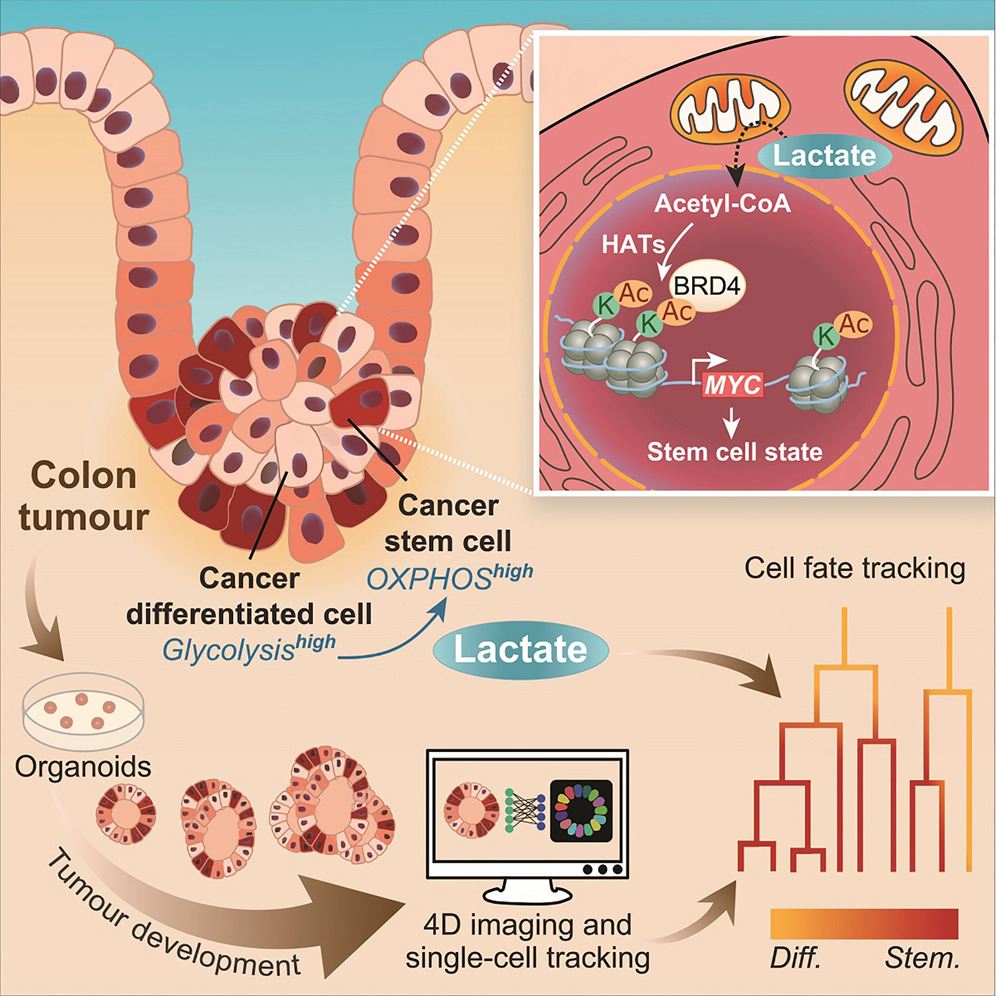
Our latest research is now online! Huge congratulations to our PhD candidate Nguyen Thi Binh Nguyen for spearheading this amazing work! More than 100 years after the discovery of the Warburg effect, we uncover a new role for lactate in shaping tumor development by increasing the population of cancer stem cells through epigenetic regulation of MYC.
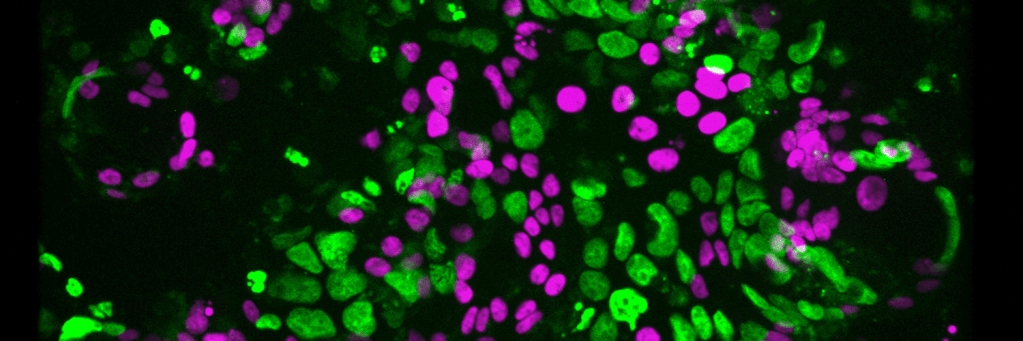
Seeing is believing! We performed advanced live imaging coupled with machine learning analysis of patient-derived tumor organoids, gaining unprecedented insights into how metabolic changes impact cancer cell identity.
A big shout-out to our fantastic collaborators: Oncode Institute Labs and Sander Tans and Jeroen van Zon Labs (AMOLF)! And to all team members of the Rodriguez Colman Lab. Grateful for the support from KWF Kankerbestrijding (Young Investigator grant scheme) and NWO (Nederlandse Organisatie voor Wetenschappelijk Onderzoek) (VIDI) for supporting fundamental research.
Interested in running bioenergetic analysis on organoids and other 3D models using Seahorse? Join the Agilent Technologies Webinar this Tuesday! An opportunity to learn from our Lab’s experience (trials and errors) 🙂